Spotify AI Persona Labels: What Indie Artists Need to Know
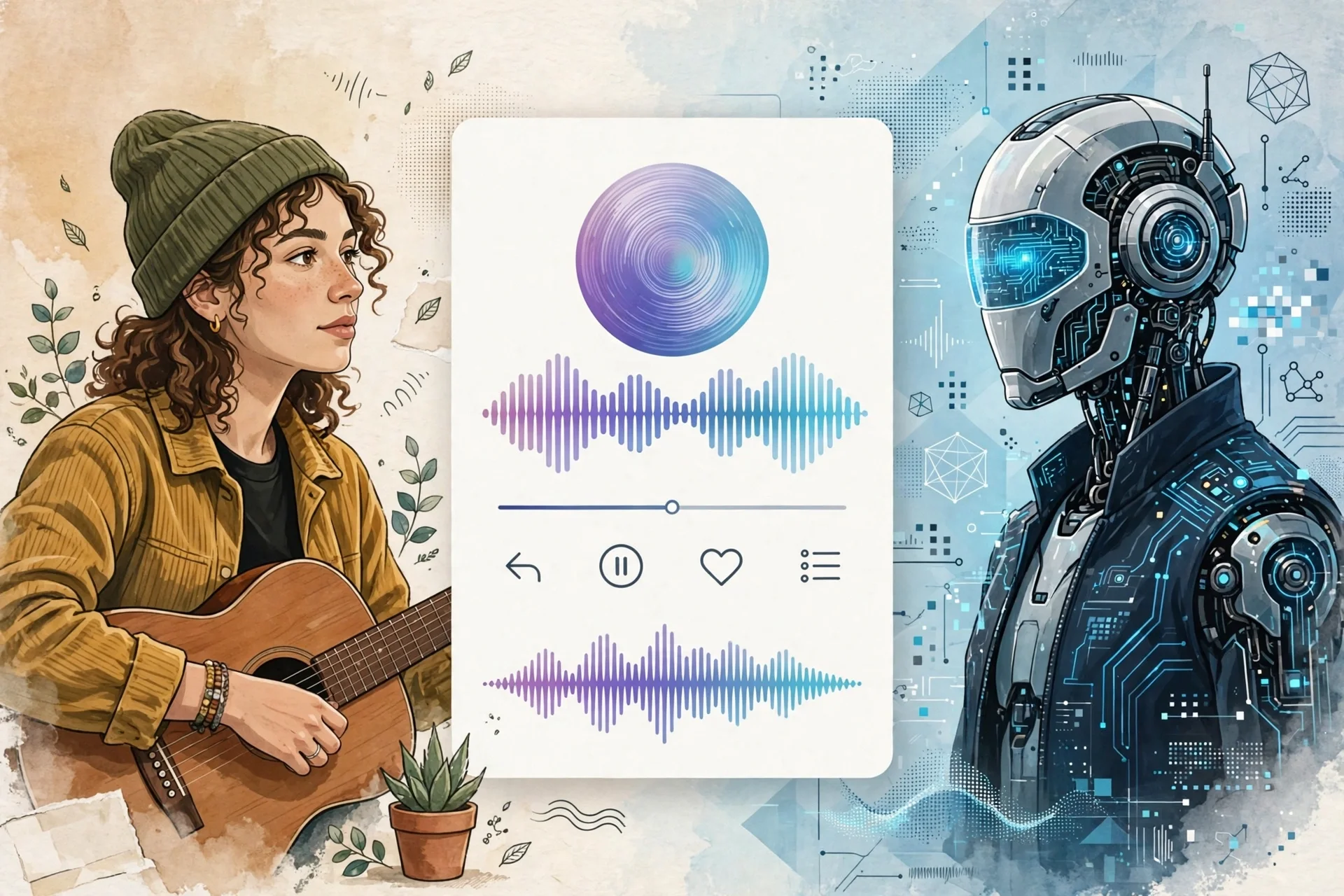
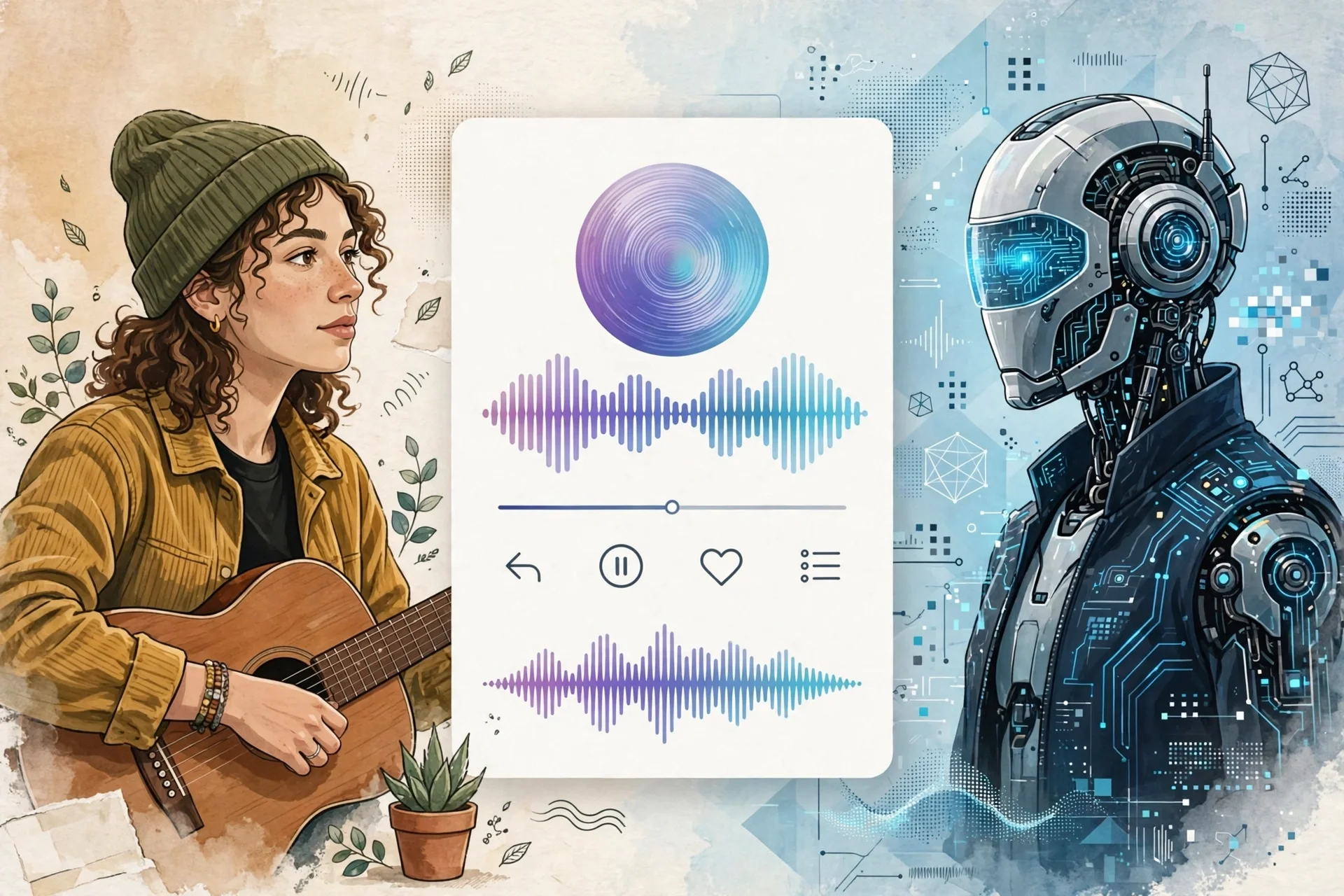
Streaming services are beginning to separate authentic artist identities from photorealistic AI-generated personas.
Spotify has begun rolling out labels that distinguish human artists from profiles built around photorealistic, AI-generated identities. For independent musicians, this is more than a cosmetic change: the label can affect whether music appears in Spotify's editorial playlists and personalized recommendations.
The update creates a clearer dividing line between artists who use AI as a creative tool and artificial performers presented as real people.
What Spotify changed
Spotify announced its AI Persona system on August 11 and began gradually introducing the badges in mid-September.
Two labels can appear:
AI Persona: The artist voluntarily disclosed that the profile represents an AI-generated person.
Likely AI Persona: Spotify reviewed the profile and determined that its identity appears to represent an AI-generated person.
The badges can appear on artist profiles, in search results and beside songs inside playlists.
Most importantly, Spotify says music from AI Personas will not normally enter editorial or personalized recommendations unless a listener intentionally engages with that artist — for example, by following the profile.
Spotify is initially reviewing profiles that have reached certain audience thresholds. Artists receiving a Spotify-applied label will be notified through Spotify for Artists and can confirm or appeal the decision.
Using AI does not automatically make someone an AI Persona
Spotify's policy focuses on the identity presented to listeners — not simply whether AI participated in creating the music.
A real artist can still use AI for:
- Audio cleanup
- Stem separation
- Mastering assistance
- Brainstorming
- Production experimentation
- Artwork and promotional workflows
That artist would not automatically qualify as an AI Persona if the profile still represents a real person, legitimate stage identity or non-photorealistic fictional character.
Spotify treats disclosures about how a recording was produced separately through its developing AI Credits system.
That distinction matters. The new policy does not ban AI-assisted creativity. It targets profiles that use artificial imagery and identities in ways that may lead listeners to believe a nonexistent performer is real.
Why this matters for independent artists
Independent artists already compete for limited playlist space, listener attention and algorithmic discovery. An AI Persona classification could make organic discovery considerably harder.
It also creates a new practical responsibility: musicians must manage their digital identities as carefully as their recordings.
An independent artist using realistic AI-generated photographs for profile images, headers or album artwork could potentially create confusion — even if the artist is a real person. Spotify says its assessment may include the name and imagery used across the profile.
Artists should therefore ensure that their biographies, photographs and other profile materials clearly communicate who they are.
Five actions artists should take now
- Audit the complete Spotify profile. Review the profile photograph, header, biography and artwork. Look for anything that might make a real artist appear artificially generated.
- Use authentic identity signals. Include real performance photographs, studio images, credits, official links and a biography containing verifiable career details.
- Document AI-assisted work. Keep records showing how AI tools were used, which materials were generated and who approved the final result.
- Check Spotify for Artists notifications. If Spotify applies a Likely AI Persona badge, respond promptly. Artists can confirm the classification or appeal it.
- Ask distributors about AI Credits. Spotify says these credits are being introduced through participating content providers. Artists should ask their distributor what disclosure options are currently supported.
Artists should also be careful before voluntarily activating the AI Persona setting: Spotify says creators cannot remove a self-disclosed badge themselves and must contact support if it was selected accidentally.
Authenticity is becoming part of music distribution
Spotify's decision reflects a broader movement toward labeling synthetic media. European transparency requirements covering certain AI-generated content became applicable on August 2, 2026, and platforms worldwide are developing their own disclosure systems.
For Detroit's independent music community, authenticity may become an important competitive advantage. The city's music has always been closely connected to identifiable people, neighborhoods, movements and lived experiences.
That does not mean Detroit artists must reject AI. It means the strongest use of AI may be behind the scenes — helping with editing, research, promotion and production — while the artist's real identity and creative direction remain visible.
This is Reality2Reel's central takeaway: use technology to extend human creativity, not to erase the human story that gives the work its value.
Sources: Spotify's AI Persona announcement (reported by NME, https://www.nme.com/news/music/spotify-announces-new-ai-labelling-system-for-ai-generated-artists-and-content-3962088 and Reuters via SRN News, https://srnnews.com/spotify-to-slap-ai-persona-badges-on-ai-generated-artist-profiles/)
About Us
We are a website dedicated to finding and sharing independent artists to the rest of the world digitally. On top of that we are also scavenging for the tool, tip and tricks and other resources.
I Make Beats Tee's (T Shirts)
(IOi)Indie Over industry INDIE Over industry speaks to the independent mindset of doing business and is also one of the many mottos of reality2reel.net. It's the independent "choice" over the Industry way of "control". We recognize the control over what gets seen