Ethical Hacking Explained in 6 Minutes
Understanding the Digital World Before You Try to Break It
In a world where everything runs on technology—from music platforms to financial systems—cybersecurity is no longer just for IT professionals. It’s a modern survival skill. But before anyone starts thinking about “hacking,” there’s a truth most people skip:
You don’t start with hacking.
You start with understanding.
This guide breaks down the real foundation of ethical hacking—the right way.
Start with the Machine
A computer isn’t magic. It’s a system.
At its core:
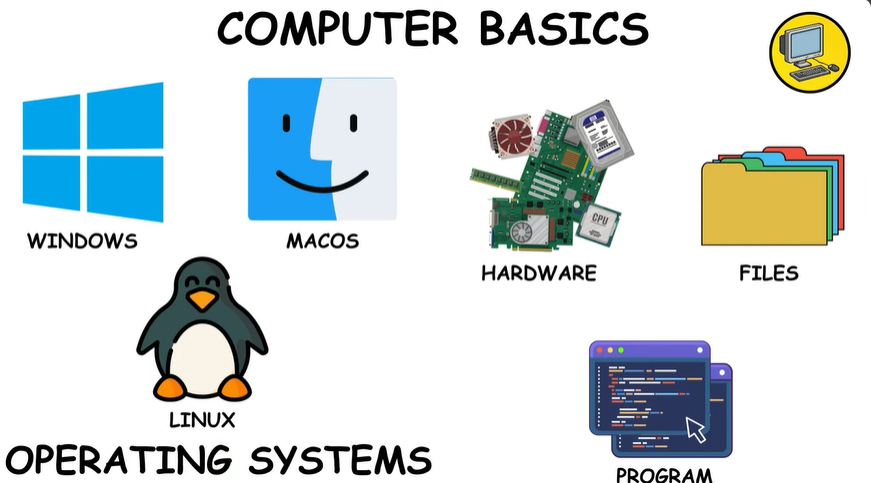
The CPU is the brain, executing instructions.
RAM is short-term memory, holding what’s needed right now.
Storage (SSD/HDD) is long-term memory, saving everything permanently.
The Operating System is the manager, keeping everything organized and running smoothly.
Every program you open follows a life cycle: it loads into memory, uses the CPU, reads or writes data, and eventually stops.
A simple habit can change everything: open your system monitor—Task Manager or Activity Monitor—and watch what happens when you launch an app. You’ll start to see your computer not as a mystery, but as a living system with patterns.
Networking: The Digital Conversation
Cybersecurity lives on networks.
Every device has:
An IP address (its identity)
Ports (entry points for services)
A system like DNS, which translates names into addresses
When you visit a website, your computer doesn’t just “go there” it communicates using structured steps. Data travels in packets, and before communication begins, devices perform a handshake to confirm both sides are ready.
Want to make this real? Log into your home router and look at connected devices. Suddenly, your Wi-Fi isn’t invisible it’s a neighborhood, and every device has an address.
Programming: Learning to Speak the Language
You don’t need to be a full developer, but you do need to understand code.
Start simple:
Read and write basic scripts in Python
Work with files, loops, and simple data extraction
Learn how to automate small tasks
These aren’t just exercises they’re your first tools.
For example:
Scan a list of IP addresses
Extract emails from messy text
Analyze logs for patterns
When you build small scripts, you begin to understand how larger security tools actually work.
Linux: The Hacker’s Environment
If cybersecurity had a home base, it would be Linux.
Most servers, tools, and security systems run on it. At first, it feels unfamiliar, but that’s part of the process.
You’ll learn to:
Navigate directories
Read and search files
Monitor processes
Understand permissions
Commands like ls, cd, grep, and chmod become second nature over time. More importantly, you start to understand how systems are structured and controlled.
And in cybersecurity, control is everything.
Operating Systems: Where Vulnerabilities Live
Different systems behave differently.
On Windows, you’ll explore:
Services
Event logs
The registry
On Linux, you’ll focus on:
System services
Scheduled tasks
File permissions
Most real-world vulnerabilities don’t come from advanced attacks they come from misconfigurations. Weak permissions, outdated services, or exposed systems.
Knowing where to look is half the battle.
Tools: Power with Purpose
There are powerful tools in cybersecurity, but they’re not shortcuts—they’re amplifiers.
Tools like network scanners, packet analyzers, and testing frameworks exist to reveal what’s already there. They help you see systems the way attackers and defenders do.
But tools only make sense when you understand the fundamentals behind them.
Otherwise, you’re just pressing buttons.
Core Concepts: The Real Skillset
This is where things become real.
You need to understand:
The difference between hashing and encryption
How authentication and access control work
Why weak passwords are still one of the biggest risks
How systems detect threats
Cybersecurity isn’t just about breaking in, it’s about understanding how systems are protected, and where those protections fail.
Practice: Where Knowledge Becomes Skill
You don’t learn cybersecurity by watching videos alone.
You learn by doing.
There are platforms designed for beginners to safely practice real scenarios. They simulate systems, vulnerabilities, and attacks in a controlled environment.
That’s where theory turns into experience.
Final Thought
Ethical hacking isn’t about chaos, it’s about clarity.
It’s about understanding systems deeply enough to see both their strengths and their weaknesses. The people who succeed in this field aren’t the ones looking for shortcuts. They’re the ones who stay curious, observe everything, and build their knowledge piece by piece.
If you can understand how a system works, you’re already on the path.
Everything else builds from there.
About Us
We are a website dedicated to finding and sharing independent artists to the rest of the world digitally. On top of that we are also scavenging for the tool, tip and tricks and other resources.
I Make Beats Tee's (T Shirts)
(IOi)Indie Over industry INDIE Over industry speaks to the independent mindset of doing business and is also one of the many mottos of reality2reel.net. It's the independent "choice" over the Industry way of "control". We recognize the control over what gets seen